
Your Training is Useless Without This One Simple Thing
Why the smartest thing you can do for your performance is strategically do less

I get young athletes coming to me all the time convinced they’ve hit a plateau. They’re training harder than ever, showing up early, staying late, grinding through brutal sessions and yet their numbers have flatlined. They think something is broken. It’s not. They just haven’t recovered from the work they’ve already done.
I tell every one of them the same thing: “You don’t get stronger from the training. You get stronger from recovering from it.”
Whether it’s a water polo athlete on the pathway to LA28 or a founder trying to scale a company without burning out, the pattern is identical. We get so obsessed with the grind that we forget adaptation only happens when we give the body a strategic chance to rebuild. That’s where the de-load week comes in.
What in the World is a De-Load Week?
A de-load week is NOT a week off spent on the couch. It’s a planned, strategic reduction in training load. You still show up, you still move with purpose, but you give your body and just as importantly, your nervous system a chance to catch up, repair, and consolidate the gains you’ve been fighting for. The goal isn’t to stimulate new growth, it’s to lock in the progress you’ve earned from the hard weeks that came before it.
During the Paris 2024 Olympic cycle, what worked well for the water polo boys in the gym was cutting volume by 50-60% while keeping the intensity up. That meant fewer total sets and reps, but the weight on the bar stayed honest. We weren’t backing off to go through the motions, we were giving their bodies room to absorb the work without losing the neural sharpness that heavy loads demand.
A quick note on terminology: Volume is the total amount of work you do, sets, reps, and exercises combined. Intensity is measured as a percentage of your 1 rep max (e.g., squatting at 80% of your 1RM). Effort is how hard the session feels, measured using the RPE (Rate of Perceived Exertion) scale from 1 to 10. They’re three different variables. During a de-load, we slash the volume but keep the intensity high fewer sets, same percentage on the bar, at a controlled effort.
You Have to Earn Your De-Load
Here’s the critical part: a de-load is a response to a planned stimulus. If your training consists of random workouts, with no structure or progressive overload, then a de-load week is pointless. You haven’t accumulated enough specific, targeted stress to need a recovery period. You’re just adding to the “junk volume” I so often see, which leads to fatigue without progress.
This is why I’m so passionate about programming. A good program is a roadmap. It has periods of building, or “accumulation,” where you’re intelligently pushing the boundaries. After a block of this, typically 3-6 weeks, you’ve earned the right to a de-load. Without that planned accumulation, you’re just spinning your wheels. Tracking your load and following a plan is what separates intentional, effective training from just “exercising.”
The Olympic Athlete vs. The Corporate Athlete
For one of the water polo boys on the path to the LA28 Olympics, a de-load is a non negotiable part of their periodisation. Their training volume is immense, and the de-load is a precision tool to shed fatigue, sharpen their nervous system, and ensure they peak for competition. We might cut their volume by 50-60% but keep some intensity to stay primed.
Now, what about the “corporate athlete”? This is the world I’m building Otion for helping executives and founders operate at their peak. Their stress isn’t just from the gym; it’s from back to back meetings, high stakes decisions, and global travel. For them, a de-load is even more crucial. It might mean swapping a heavy lifting session for a long hike, prioritising mobility, and being militant about sleep. It’s a chance to empty the “life stress” bucket, not just the “training stress” bucket, so they can maintain their energy and resilience as a competitive advantage.
What Gets Measured, Gets Managed: Meet Sam
This isn’t just coaching philosophy; it’s a data-driven reality. My coaching mantra is simple: what gets measured, gets managed. We have to move beyond just “feeling tired” and look at objective metrics. A perfect example is my client, Sam, a classic corporate athlete who trains with purpose.
After a solid block of training, we programmed a de-load. She was hesitant, worried about losing momentum. I told her to trust the process and, more importantly, to trust the data. We tracked her Heart Rate Variability (HRV) and Resting Heart Rate (RHR). For those who don’t know, a higher HRV indicates a well-recovered, adaptable nervous system ready to take on stress. A lower RHR signifies improved cardiovascular efficiency and reduced fatigue.
Look what happened.
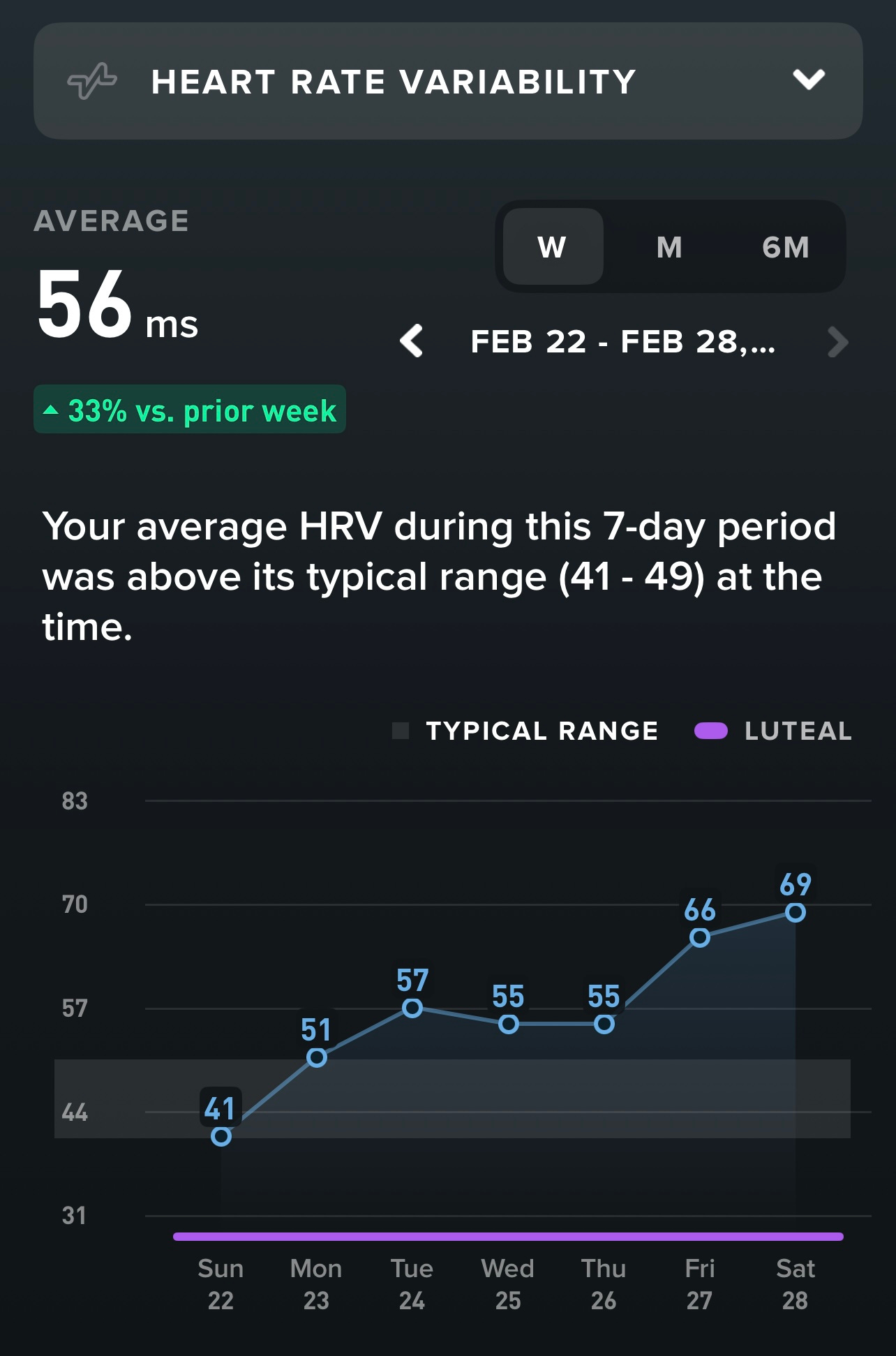
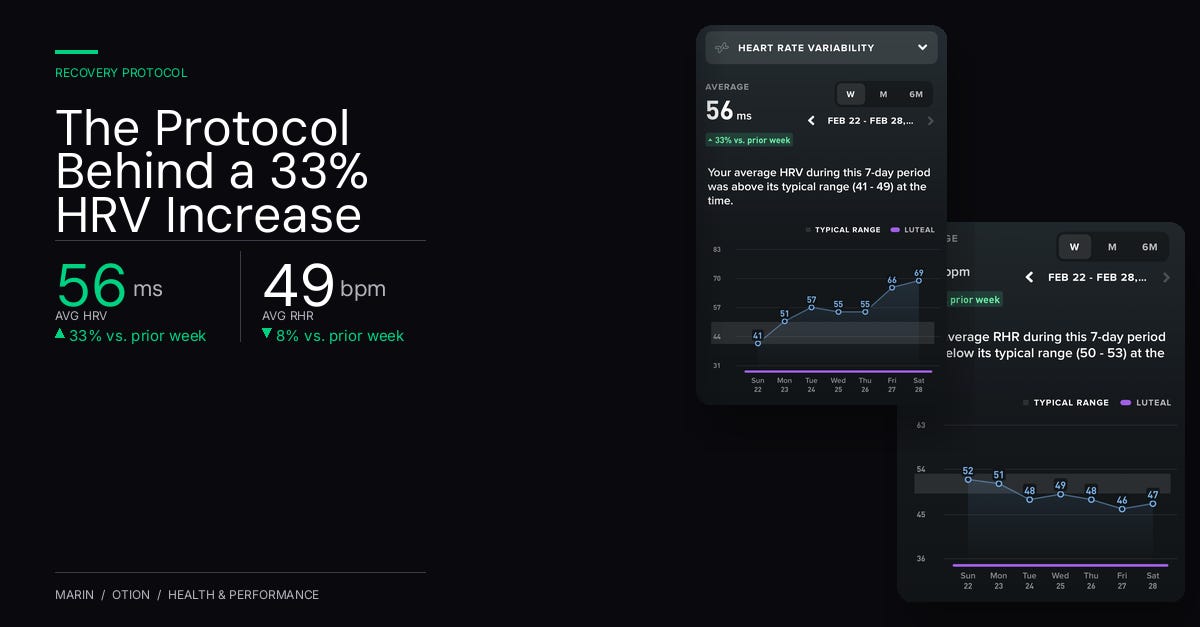
Over the de-load week, Sam’s average HRV shot up by 33%, moving from a fatigued state into her optimal recovery zone. Her body was finally getting the break it needed to repair and adapt. Simultaneously, her Resting Heart Rate dropped by 8%. Her heart was becoming more efficient. The engine was running smoother, ready for the next challenge.
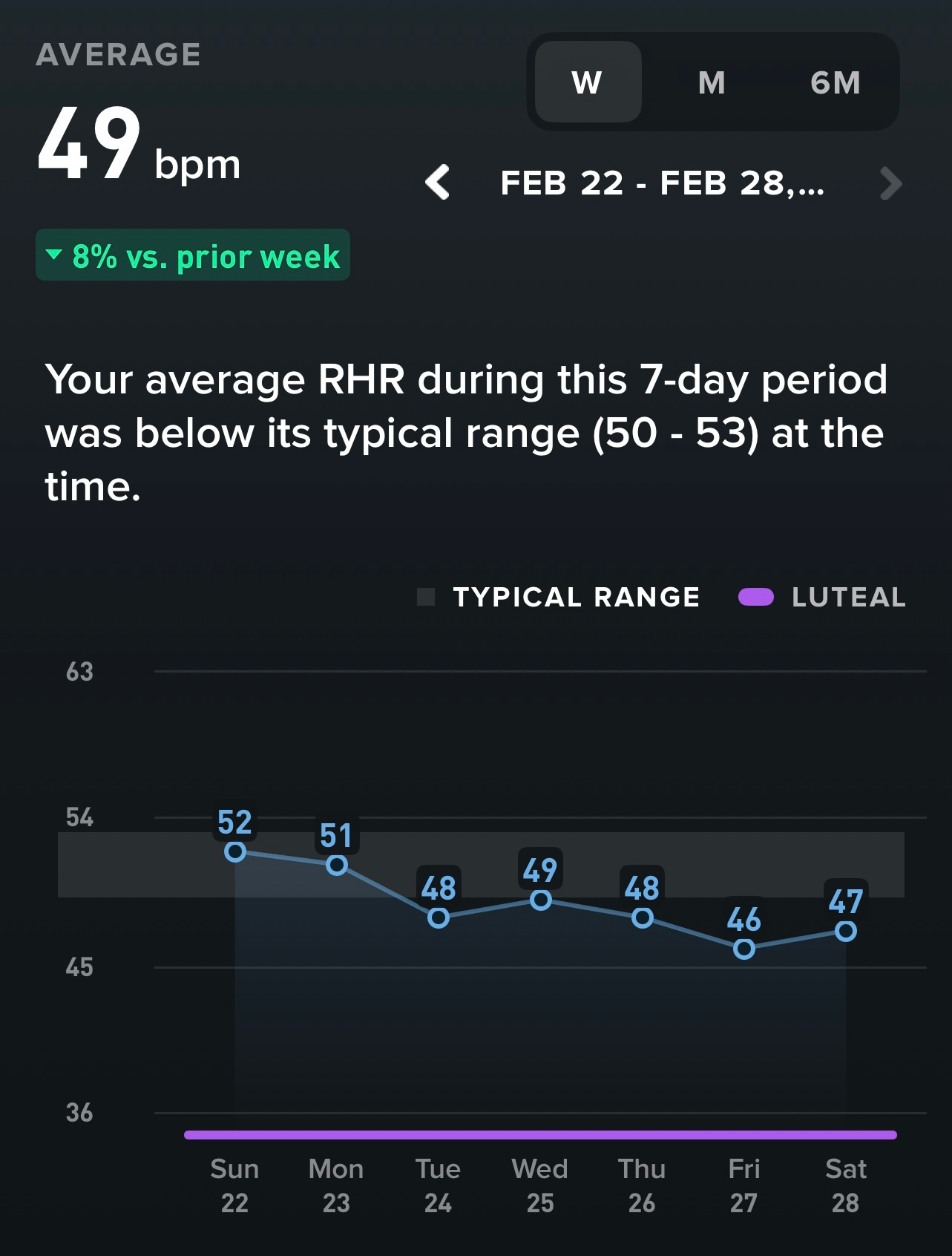
This is what a de-load looks like in black and white. It’s not a step back. It’s a slingshot forward. Sam came back the next week refreshed, motivated, and started hitting new personal records. She let the mortar set, and now she’s ready to build again.
So, the next time you feel your progress stalling, don’t just assume the answer is “more.” Look at your plan. Look at your data. It might just be that the smartest, most productive thing you can do is to strategically do a little less.
If your HRV has been trending in the wrong direction and your resting heart rate won’t come down no matter how hard you train, that’s your body telling you something. The answer isn’t more volume, it’s a smarter plan. I help athletes and high performers build programmes that drive real, measurable recovery and performance gains, just like Sam’s results above. If you want to see your own numbers shift, DM me, let’s get your HRV up and your RHR down.